Every budget is a guess until it knows local prices.
MoneyPilot prices a real food basket for your household at this month's median in your own area — then tells you what is genuinely possible, and says so plainly when it isn't.
- Every figure traces to a price report
- No bank login, ever
- Works with the model switched off
- Rice (local) ₦2,250
- Beans (brown) ₦1,930
- Bus (one drop) ₦440
- Garri (white) ₦990
- Tomatoes ₦1,830
- Fresh pepper ₦1,990
- Onions ₦1,637
- Sliced bread ₦1,420
- Yam tuber ₦3,500
- Noodles ₦530
- Okada (short run) ₦760
- Eggs ₦5,700
- Keke (one drop) ₦380
- Palm oil ₦2,549
- Spaghetti ₦1,000
- Titus fish ₦4,700
- Chicken ₦5,000
- Vegetable oil ₦3,200
- Cooking gas ₦1,325
- Seasoning cubes ₦781
- Sachet water ₦410
- Sugar ₦1,670
- Salt ₦660
- Beef ₦6,050
- Kerosene ₦1,660
- Powdered milk ₦390
- Bar soap ₦770
Same income. Different city. Different life.
This is the part no percentage-based budget can do. Change the city and watch the floor move — these are live medians from the price network, costed by the same engine that builds a real budget.
Advice built on assumptions
“Spend 30% on food” is a rule imported from economies where prices are stable and published. Here it is a guess wearing a suit.
Prices move faster than plans
A budget set in January is quietly wrong by March. Nothing tells you which line broke, or by how much, until the money runs out.
The same item, different money
Prices vary street to street, let alone state to state. Without local data, “the average price” is nobody's price.
A basket, a commute, a kitchen.
Not abstractions. MoneyPilot budgets the things a household in Lagos or Nsukka actually buys, at the prices they are actually sold for.
 ₦1,830 tomatoes, per kg
The market
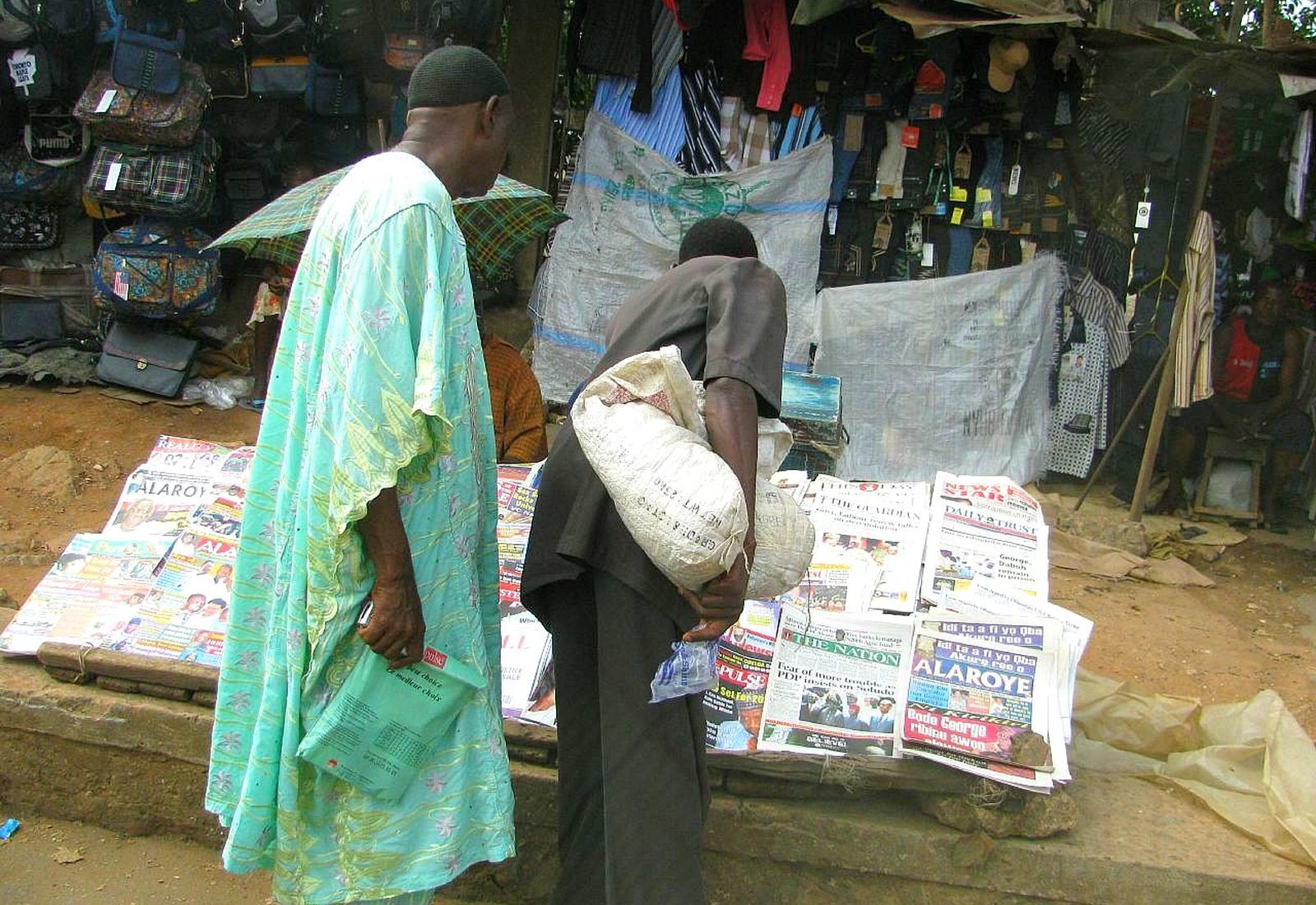
Eighteen staples, priced from community reports in your own LGA — not a national average that matches nobody.
 ₦440 per drop
The commute
Your real fare, your real trip pattern. Transport is the second-biggest line in most household budgets and the most often guessed at.
 ₦9,517 a week of meals
The kitchen
The budget becomes a plan: seven days of real meals costed at this week's prices, with the shopping list to match.
Four steps. The interesting one is the third.
-
1
Your situation
Income and how reliable it is, fixed commitments, household size, where you shop. Irregular income is budgeted at a discount.
-
2
Commitments first
Rent, fees and debt come off the top. They are not negotiable, so the engine never pretends they are.
-
3
The difference
The floor is measured
A real basket for your household, priced at this month's median in your LGA. Not a percentage — an amount, with the reports behind it.
-
4
What's left, by your priorities
Only the remainder is split by preference. And if nothing is left, MoneyPilot says so instead of shrinking your goal behind your back.
It says no — and then does the work.
Two decisions define this product more than any feature: what it does with a month that does not add up, and how little the AI is allowed to touch.
When the month does not fit
Costed options, ranked by what they cost you
Every competitor makes the arithmetic work by quietly shrinking the savings goal. MoneyPilot states the shortfall in naira, then produces concrete options and prices each one — how much it frees, and how much it hurts.
- 1 Move a goal's deadline out costs you time
- 2 Shop the cheaper market near you costs you a trip
- 3 Swap an item whose price just moved costs you a preference
- 4 Cut trips out of the month costs you convenience
- 5 Skip the goal this month offered last, on purpose
Options worth under ₦500 a month are dropped rather than listed. A list where two entries matter and three are noise teaches people to stop reading the list.
What the model is allowed to do
The ordering is the whole safety argument
The engine computes the answer. The model is then handed the finished answer and the finished figures and asked to say it more naturally. It is never given the question, so it cannot decide anything.
Anyone can collect prices. Making them trustworthy is the hard part.

This is where most community data projects quietly fail — so all four defences are visible in the interface rather than buried in a methodology note.
Reports sitting more than 2.5 deviations from their peer group. They are excluded from every median a member sees, and stay on file until an operator decides.
Weighted median, never a mean
One mistyped ₦19,000 bag of rice wrecks an average and leaves a median untouched. Every figure in the product is a median.
resists outliers by constructionOld prices fade
A report's weight halves every 21 days, so Tuesday outranks last month without a hard cutoff that throws data away.
exponential decay · 21-day half-lifeOutliers are held, not deleted
A price that looks wrong is sometimes a market that moved. Anything past 2.5 deviations waits for a human, and the evidence stays.
median absolute deviationThin data admits it
Too few local reports and we widen the area — then say so, in words, every single time, and lower the budget's confidence to match.
the failure that would end the productOne network, two very different jobs.

For people
Phone and desktop app · 10 screens
Answers “what can I actually afford this month, and what should I do about it?”
- A budget where every line shows its working
- Warnings before the money runs out, not after
- A week of meals costed at this week's prices
- Honest trade-offs when the numbers don't fit

For the network operator
Desk console · 7 screens
Answers a different question: “is this data good enough for people to plan their lives on?”
- A moderation queue for flagged reports
- Coverage and blind spots, area by area
- Contributor reliability and standing
- The national price index and its spread
A budget built from what things actually cost near you.
Sign in to a seeded household and see the floor, the pace, and the trade-offs — every figure with its working.